Best Beethoven Sonatas to Start With (Not Too Difficult)
🎹 Beginner’s Guide to Beethoven Sonatas (From Easy to Intermediate)
When students begin exploring piano sonatas, the music of Ludwig van Beethoven is often their first serious step into classical repertoire. However, not all sonatas are beginner-friendly.
Based on real teaching experience, here is a carefully structured progression—from easiest to more demanding—along with practical advice on how to approach each piece.
Contents
1. Sonata No. 20 in G Major, Op. 49 No. 2 ⭐ (Easiest)
This is widely considered the best entry point into Beethoven sonatas.
Why it’s beginner-friendly:
- Clear phrasing and structure
- Comfortable hand positions
- Moderate tempo and simple rhythms
How to practice:
- Focus on even tone between both hands
- Practice hands separately first, especially Alberti bass patterns
- Keep articulation light and classical, avoid heavy touch
Teaching tip:
Think of this piece as learning to “speak clearly” in music. Every phrase should feel natural and balanced.
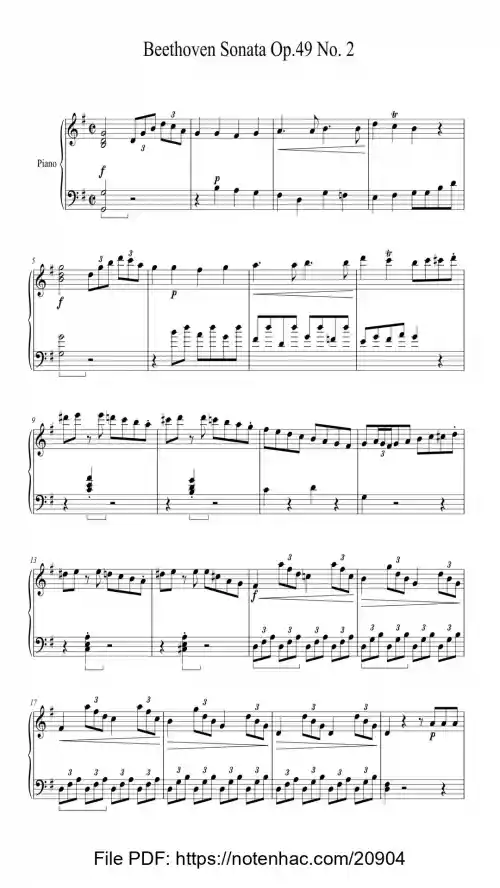
Link download PDF + mid: https://notenhac.com/free-sheet-piano-sonata-op-49-no-2-in-g-major-level-intermediate/
10 Most Beautiful Johann Sebastian Bach Piano Pieces (With Sheet Music)
2. Sonata No. 19 in G Minor, Op. 49 No. 1
Slightly more expressive and darker in mood compared to No. 20.
Key challenges:
- Controlling dynamics in a minor key
- Voicing melody above accompaniment
- Maintaining steady tempo in expressive passages
How to practice:
- Isolate melody and sing it before playing
- Use slow practice to refine dynamic contrast
- Avoid rushing—this piece needs emotional control
Teaching tip:
This is where students start learning musical storytelling, not just playing notes.
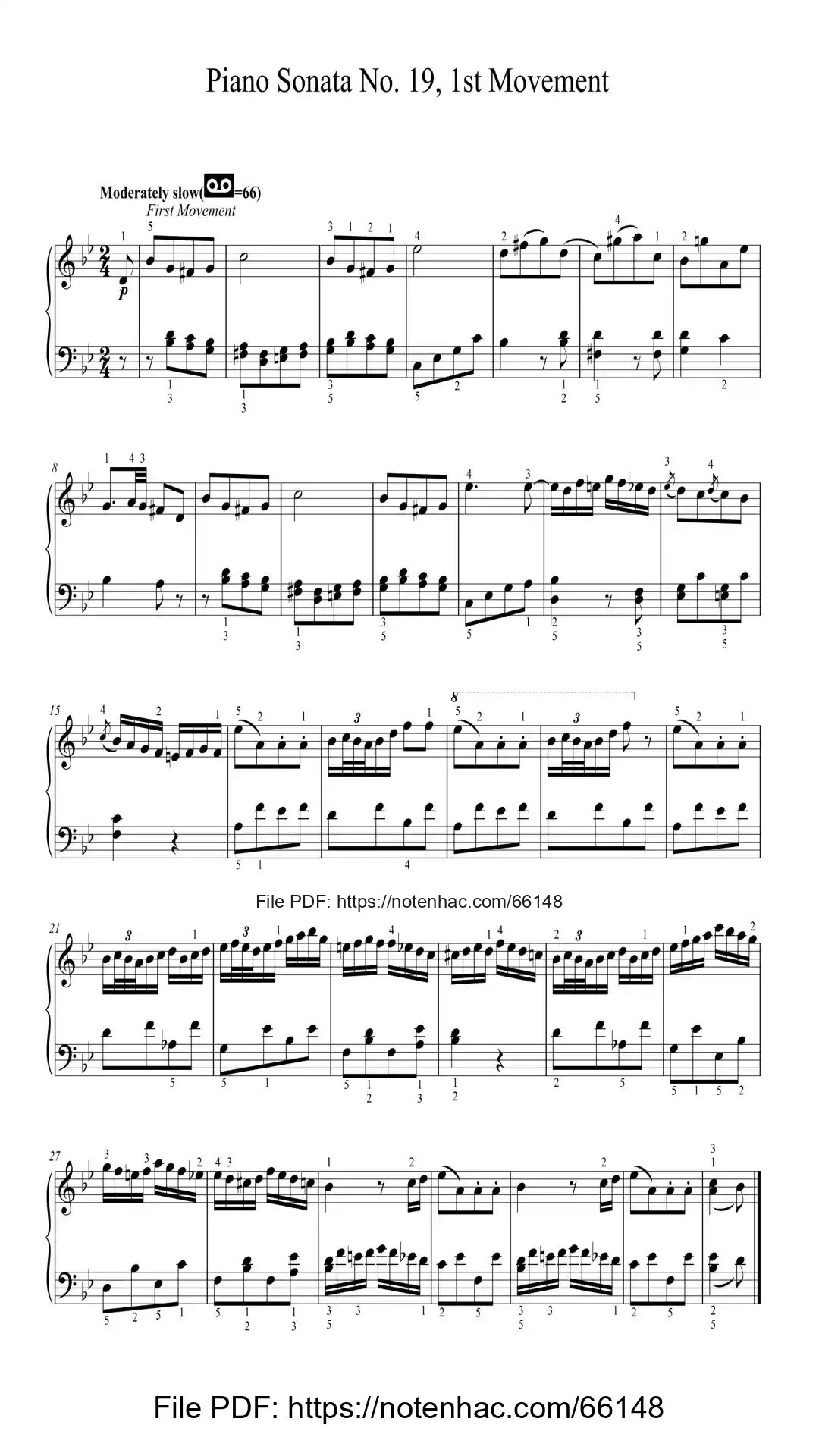
Link download PDF + mid: https://notenhac.com/piano-sonata-no-19-in-g-minor-op-49-no-1-i-andante-piano-composition-free-pdf-sheet/
3. Sonata No. 25 in G Major, Op. 79
A lively and energetic sonata that introduces more advanced coordination.
Key challenges:
- Fast passages and finger agility
- Rhythmic precision (especially final movement)
- Light staccato articulation
How to practice:
- Use metronome practice consistently
- Break fast runs into small rhythmic groups
- Keep wrists relaxed to avoid tension
Teaching tip:
Don’t try to play fast too early. Speed comes naturally after control.
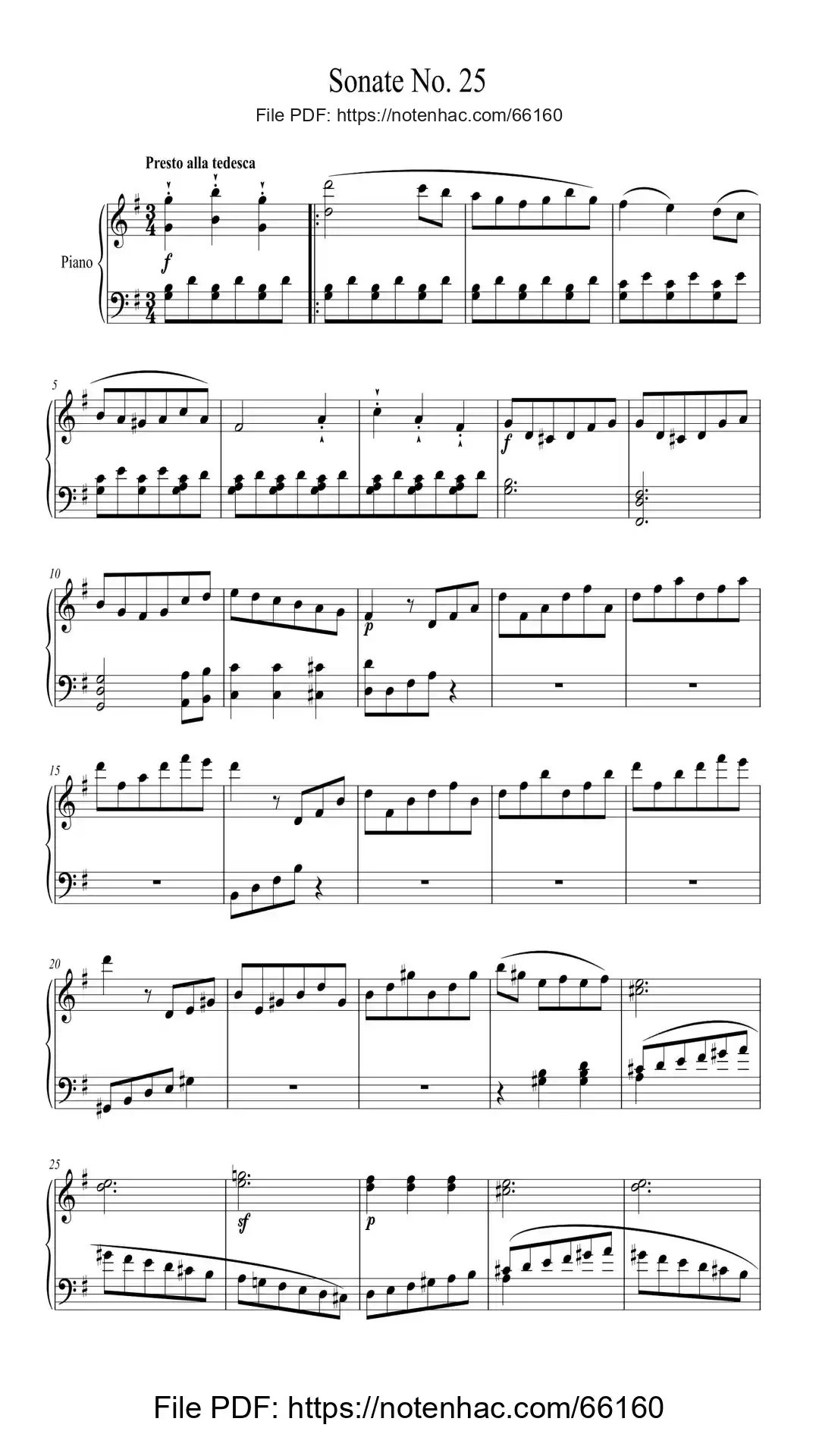
Link download PDF + mid: https://notenhac.com/sonata-no-25-in-g-major-op-79-i-presto-alla-tedesca-free-piano-music-sheet-printable-pdf/
4. Sonata No. 1 in F Minor, Op. 2 No. 1
Despite being “No. 1”, this is not a beginner piece.
Key challenges:
- Strong left-hand technique
- Complex textures and contrasts
- Understanding sonata form structure
How to practice:
- Analyze sections (exposition, development, recapitulation)
- Practice left hand alone for strength and clarity
- Focus on articulation differences between themes
Teaching tip:
This piece marks the transition from “learning piano” to studying piano seriously.
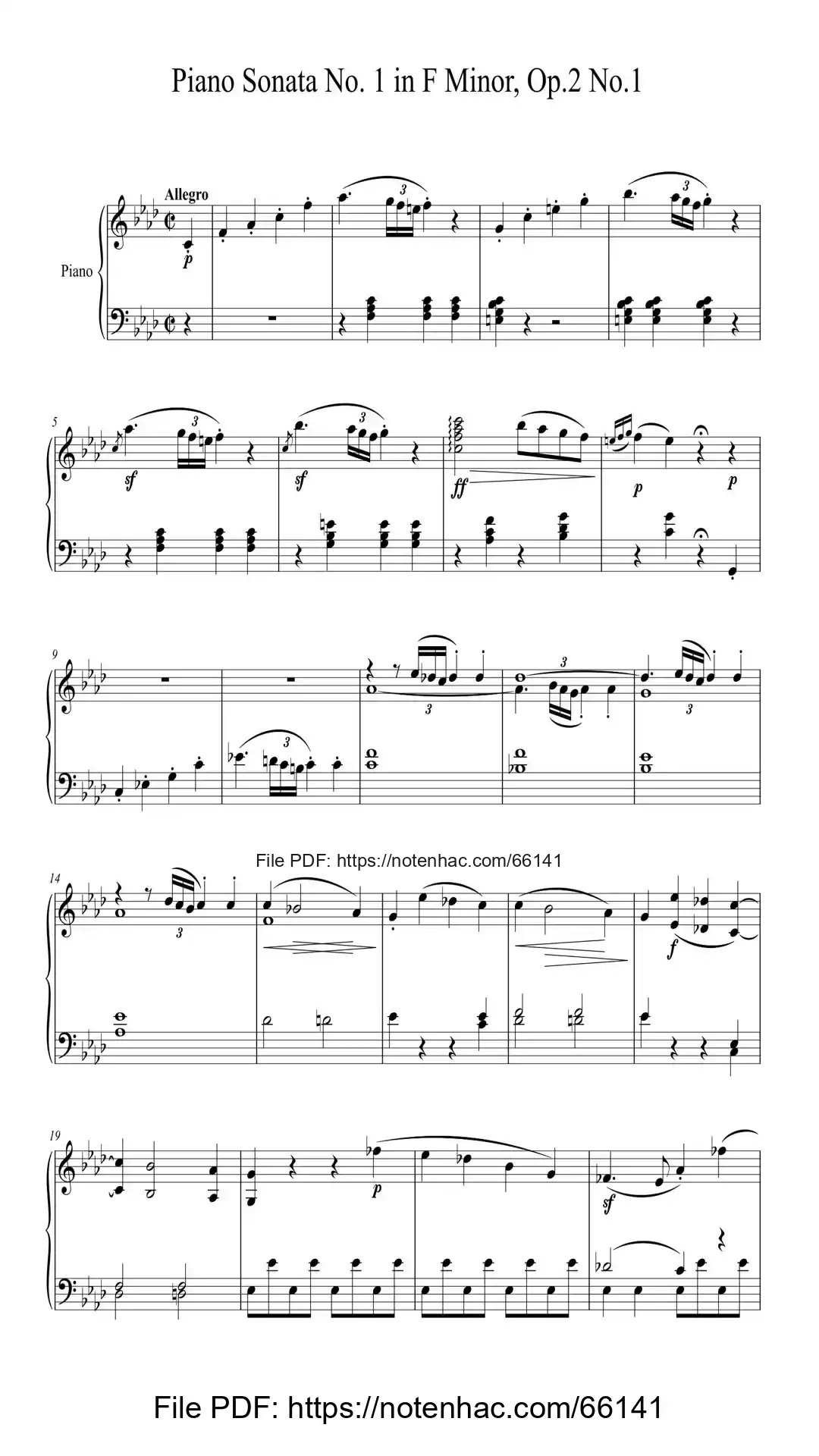
Link download PDF + mid: https://notenhac.com/piano-sonata-no-1-in-f-minor-op-2-no-1-free-printable-piano-sheet-music-pdf/
How Beginners Should Approach Their First Sonata
Starting a sonata is very different from playing short pieces.
Step-by-step method:
- Listen first – build a clear musical idea
- Divide into sections – never learn the whole piece at once
- Hands separately – essential for control
- Slow practice – accuracy before speed
- Use a metronome – develop stable rhythm
- Focus on phrasing – music must “breathe”
❌ Common Mistakes Beginners Make
- Playing too fast too early
- Ignoring dynamics and articulation
- Practicing without structure
- Treating sonata like a simple piece
✅ Recommended Learning Path
- Start with:
→ Op. 49 No. 2
→ Op. 49 No. 1
→ Op. 79
→ Op. 2 No. 1
This progression builds both technical skill and musical understanding in a natural way.
Final Thoughts
Learning a Beethoven sonata is a major milestone for any pianist. With the right approach, even beginners can develop strong technique, musicality, and confidence.
Take your time, stay consistent, and remember:
Clarity is more important than speed.
FAQ
1. What is the easiest Beethoven sonata for beginners?
Sonata No. 20 in G Major, Op. 49 No. 2 is the easiest and most recommended starting point.
2. How long does it take to learn a beginner sonata?
Typically 2–6 weeks depending on practice time and experience.
3. Should beginners use a metronome?
Yes. It helps develop rhythm, control, and consistency.
4. Can self-taught players learn Beethoven sonatas?
Yes, but guided structure and careful practice methods are essential.
5. What level should I be before starting a sonata?
Late beginner to early intermediate level is recommended.